


Andar Bahar Made Simple with Practical Ways to Avoid Costly Errors
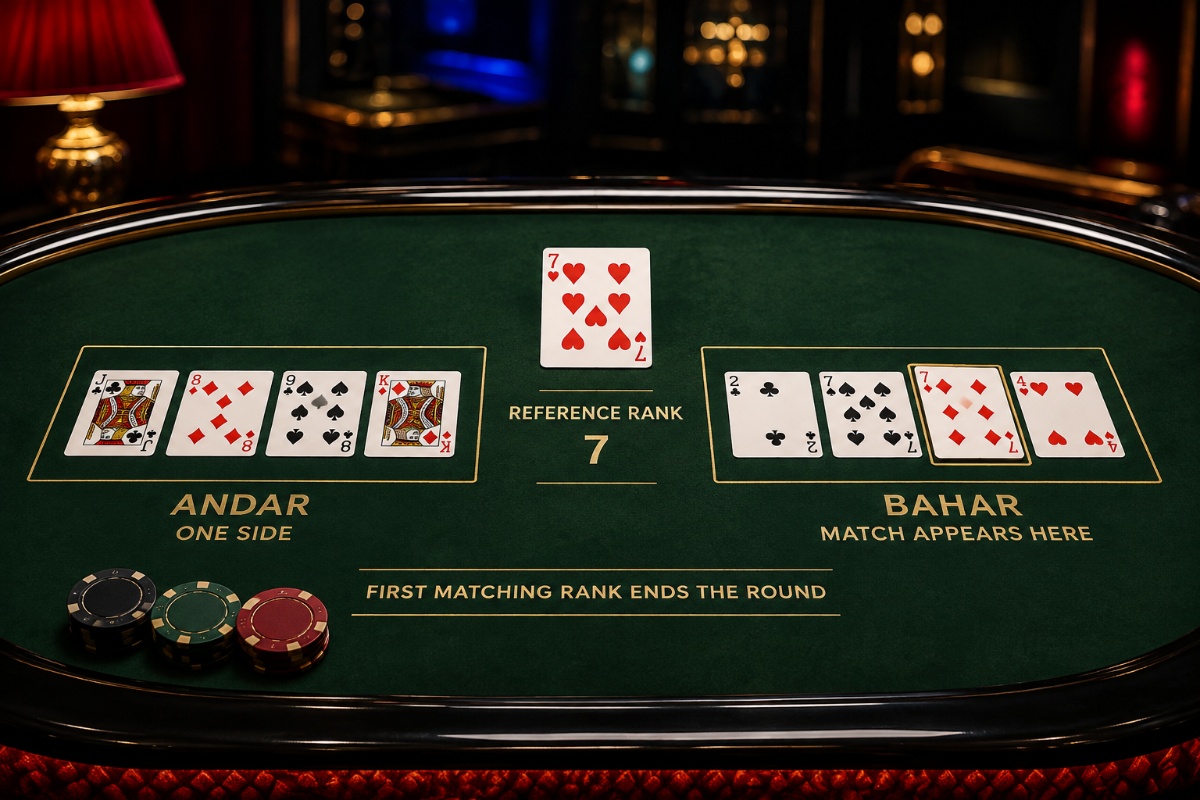
Andar Bahar is a fast card game built around one simple question: which side will receive a card matching the rank of the opening card first? That simplicity is exactly why the game can be misunderstood. Before playing Andar Bahar, it helps to know how the reference card works, why the dealing order matters, what side bets actually change, and why previous rounds cannot predict the next result.
Andar Bahar starts with one reference card
A standard Andar Bahar round begins with a shuffled deck and one face-up card in the centre. This card is commonly called the Joker, although it is not a wild card in the usual sense. Its rank becomes the target. If the opening card is a seven, the round ends when another seven appears on either side.
After betting closes, Andar Bahar cards are dealt to the two positions called Andar and Bahar. Dealing continues until the same rank as the opening card appears. The side receiving that match determines the main result. Suits do not normally decide the basic outcome, but always check the table rules.
Why the dealing order deserves attention
The main choice in Andar Bahar looks like a simple two-way selection, yet dealing order can affect the mathematical balance between the sides. Online versions may use payout adjustments for this structure. Read the displayed table rules rather than assuming both selections always settle identically.
When Andar receives the first card after the reference card, its probability differs slightly from the second side. Some Andar Bahar variants reverse the starting side or adjust the payout. Rather than memorising one universal figure, confirm the dealing order and payout shown on the table.
A match is based on rank, not suit
Suppose the opening card is the queen of hearts. The target rank is queen. If a queen of clubs later appears on Bahar before any other queen is dealt, Bahar receives the matching card and becomes the main winning side under the standard format. The heart, club, diamond or spade symbol does not make the original card more predictive.
This makes Andar Bahar easy to follow visually. You do not build a five-card poker hand or calculate a blackjack total. You watch for the first matching rank. That simplicity does not make the next card reliably predictable.
Keep the main wager separate from side bets
Some Andar Bahar tables include optional wagers based on how many cards appear before the matching rank. These may use early, middle or later card ranges. Labels and payouts vary, so treat side bets as separate wagers rather than extensions of the main side choice.
In Andar Bahar, a larger displayed payout usually reflects a less frequent condition. It does not mean that the side bet has become more likely because several previous rounds missed it. Before adding any optional wager, check what event must happen, the stake required and the applicable paytable.
Andar Bahar needs a total-stake calculation
Small chips can hide the amount committed when several positions are selected. Imagine a fictional round where SGD 4 is placed on the main side and SGD 1 is added to two separate optional positions. The total amount committed to that round is SGD 6. Looking only at the SGD 4 main wager understates the actual exposure.
If the same SGD 6 allocation is repeated for ten rounds, turnover reaches SGD 60. Turnover is simply the amount put into play. It is not the same as loss, and it does not predict what will be returned. This distinction is useful whenever Andar Bahar offers several betting positions on the same table.
Previous cards do not make the next match due
A run of Andar results can make Bahar feel overdue, while several Bahar results can create the opposite impression. Neither pattern changes what the shuffled cards must do in the next independent round. Historical results can describe what happened, but they do not create a debt that future cards are required to correct.
The same principle applies to the number of cards dealt before a match. If several recent Andar Bahar rounds ended quickly, that does not guarantee the next round will run longer. A long sequence also does not make an early match inevitable. Past outcomes should not be treated as a forecasting system.
Side-bet ranges are not a shortcut to prediction
Optional card-count wagers can look tempting because they divide the round into visible ranges. They still depend on where the matching rank appears in the shuffled sequence. Choosing several ranges can increase the number of covered conditions, but it also increases the combined stake unless each individual wager is reduced.
For example, placing SGD 2 on three different ranges creates a SGD 6 total side-bet stake. Covering more outcomes does not eliminate the possibility that all selected positions lose under the table rules. In Andar Bahar, broader coverage and lower uncertainty are not the same thing.
Set the session amount before the first deal
The short rounds in Andar Bahar can make spending accumulate quickly. A useful approach is to decide the entertainment amount first, then choose a per-round total that fits it. If a session limit is SGD 80 and each completed round uses SGD 8 in total, that represents ten rounds at that stake level before any returned amounts are considered.
This calculation does not tell you whether those rounds will win or lose. Its purpose is to make the possible pace of wagering visible. Increasing stakes after losses can shorten the session rapidly, while increasing them after wins does not make the next result more favourable.
Use the current table information instead of memory
Even when the core idea of Andar Bahar is familiar, online versions can differ in dealing order, betting windows, side wagers, minimum stakes and settlement details. Check the information panel before the first wager, especially when opening a table you have not used before.
Gembet’s live casino collection can change as tables are added, removed or reorganised, so current availability should be checked directly in the live-game lobby. Gembet also explains its broader casino fairness controls in its casino fairness information. The rules displayed for the selected table remain the practical reference for an individual round.
Andar Bahar and wheel games require different thinking
Players moving from a game-show wheel may recognise the fast betting windows, but the underlying mechanics are different. Our Crazy Time guide explains a segmented wheel where the result comes from the stopping position. Andar Bahar instead uses a shuffled deck and a matching-rank process.
That distinction matters because habits from one format should not automatically be transferred to another. A wheel segment distribution and a card-dealing sequence are different probability structures. Understanding the mechanism in front of you is more useful than applying one generic casino strategy to every fast game.
Connection issues should be checked before betting again
Live games depend on a stable stream, but a temporary connection problem does not necessarily mean an accepted wager vanished. Gembet’s Help Center states that live-casino bets placed before a disconnection remain valid and are settled normally. Completed rounds can be reviewed through game history.
If an Andar Bahar stream freezes after your wager has been accepted, check the round record before placing another stake merely to replace it. A second wager is a new financial decision, not a repair of the first one. Connection management is about avoiding confusion, not changing the cards.
Do not confuse simplicity with certainty
Andar Bahar has fewer decisions than many casino card games, which can make it feel unusually predictable. In reality, simplicity describes the rules, not the outcome. The player normally chooses a side, the cards are dealt, and the matching rank decides the result. There is no decision after the deal that can force the target card onto one side.
Claims about guaranteed sequences, unbeatable patterns or software that supposedly knows the next matching side should therefore be treated cautiously. A chart of recent rounds can be useful as history, but it cannot guarantee what the shuffled deck will produce next.
Andar Bahar is clearer when the wager stays simple
For a first session, keeping the number of betting positions limited can make Andar Bahar easier to understand. Know the reference rank, confirm which side receives the first card, check the payout and watch how the matching card ends the round. Add optional wagers only after understanding exactly what each one requires.
Andar Bahar works because the central mechanic is easy to see: one reference rank, two sides and one first match. The useful discipline is equally straightforward. Read the current rules, calculate the full stake rather than one chip, keep previous rounds in the past and use a fixed session limit. That approach cannot guarantee a result, but it can prevent the game’s speed and simplicity from hiding how each wager actually works.
Experience the real deal with SG's top Live Dealers. Play Baccarat, Roulette & more.

