


Online Keno Unlocked with Clear Ways to Avoid Costly Picks
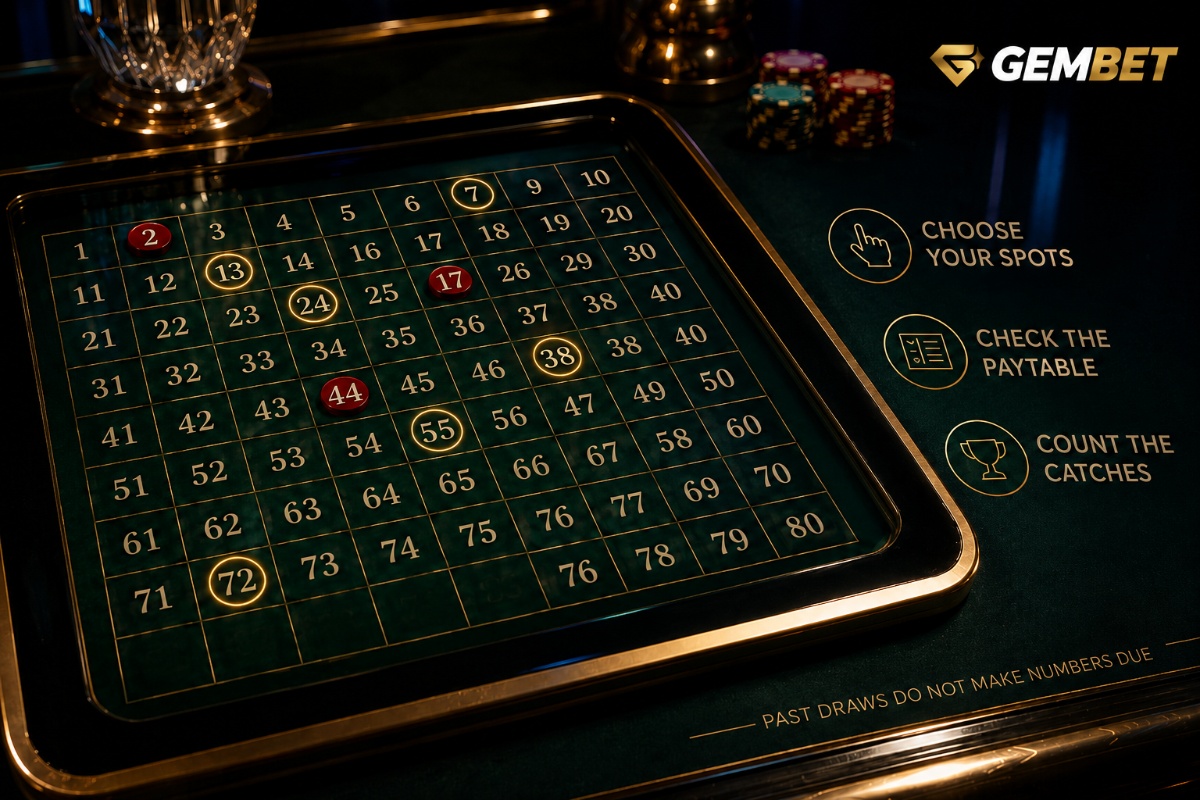
Online keno is a number-draw casino game built around a simple choice: select numbers, choose a stake and see how many of your picks match the numbers drawn. The basic idea is easy to understand, but the paytable can change dramatically depending on how many numbers you select and how many you match. Before playing online keno, learn how spots, catches, payouts and total stake work so the game does not become more complicated than the number grid suggests. Online keno is much clearer once those basic terms are separated.
Online keno begins with the number grid
A classic keno layout normally shows numbers from 1 to 80. You choose a set of numbers before the draw, then a group of winning numbers is selected. Traditional formats commonly draw 20 numbers, although digital versions can use different rules or presentation styles. The result depends on how many of your selected numbers match the draw rather than the order in which the matches appear.
If you choose five keno numbers, for example, you are playing what is often called a five-spot ticket. Selecting eight creates an eight-spot ticket. The number of spots matters because each ticket size can have its own keno paytable. More selections do not automatically mean a stronger wager or a better chance of profit.
The number of spots changes the wager
One of the first decisions in online keno is how many numbers to select. Choosing only a few creates a different probability structure from selecting ten or more. The payout table usually changes with the number of spots because matching all selected numbers becomes progressively harder as the ticket size changes.
This is why comparing only the largest advertised prize can be misleading. A ten-spot ticket may show a much larger top payout than a three-spot ticket, but the conditions required to reach that amount are also different. Read the exact keno paytable for the ticket size you intend to use before placing the wager.
A catch is simply a matching number
In keno terminology, a catch is one of your selected numbers appearing among the drawn numbers. Suppose you choose 4, 18, 31, 52 and 67, and the draw includes 18, 31 and 67. You have caught three of your five selected numbers. Whether that produces a payout depends on the rules for that five-spot ticket.
Online keno does not necessarily require every chosen number to match. Some paytables can award smaller amounts for partial catches while reserving the largest payout for matching all selected spots. Never assume a particular number of catches pays without checking the current table.
Online keno paytables deserve more attention than favourite numbers
Players often spend time choosing birthdays, patterns or personally meaningful keno numbers, yet the paytable has a much clearer effect on the wager. Your selected pattern does not receive better odds because the numbers have personal meaning. What matters for settlement is the number of spots selected, the number of catches and the corresponding payout shown for that game.
Before starting online keno, compare the columns for your chosen ticket size. Check which catch counts pay, whether some low-match results return anything and how the top payout is calculated. A large headline multiplier should be read together with the probability of reaching the required number of matches.
More numbers do not guarantee more winning chances
Selecting additional spots can make a ticket feel more comprehensive because more keno numbers are marked. However, the wager is evaluated under the paytable for that larger spot count. You are not simply adding independent chances in the same way as buying separate tickets.
For example, an eight-spot online keno ticket requires you to compare the draw against eight chosen numbers. Matching four may settle differently from matching four on a six-spot ticket. The number of selected spots changes the entire payout structure, so a bigger ticket should not be treated automatically as safer or more favourable.
Calculate the stake before repeating draws
Fast digital draws can make a small wager accumulate quickly. Imagine using SGD 2 per online keno draw and selecting ten consecutive draws. The planned turnover is SGD 2 × 10 = SGD 20. If the stake rises to SGD 5 while the number of draws stays the same, the turnover becomes SGD 50.
Turnover is the amount placed into play. It is not the same as loss and does not predict how much will be returned. The calculation is useful because repeated draws can continue quickly, making the total stake less obvious than a single-ticket amount.
Previous draws do not make a number due
A history panel can make online keno feel like a pattern-searching exercise. If number 22 has not appeared for several draws, it may feel overdue. If number 47 appears repeatedly, it may look hot. Neither observation guarantees anything about the next properly random draw.
Past keno numbers show what has already happened. They do not create a requirement for future draws to balance the short-term record. A number can appear again immediately, remain absent or return after an unpredictable gap.
The same principle applies to combinations. If two numbers appeared together several times, that does not prove they form a stronger pair for the next online keno ticket.
Online keno and wheel games use different mechanics
Number-based casino games can look similar because both display clearly labelled outcomes, but the underlying mechanisms can be very different. Our Crazy Time guide covers a segmented live wheel where the stopping position determines the result. Online keno instead compares selected numbers with a random draw from a larger number pool.
That difference matters when judging patterns. A wheel segment distribution and a keno draw are not interchangeable probability models. The safest approach is to understand the exact game in front of you rather than applying one betting idea to every number-based casino format.
Check the current game rules on Gembet
When browsing Gembet for online keno or another number-draw title, use the current game information to confirm the number range, maximum spots, draw size, stake limits and payout table. Different keno versions can use different rules, so a ticket structure remembered from another game should not replace the information shown for the current one.
If the version includes automatic draws, multiple-round selection or additional features, check how those settings affect the total amount committed before confirming the wager. A convenience feature can change execution speed without changing the probability of the underlying number draw.
Set the session limit before choosing repeated draws
Online keno can make it easy to commit to several rounds at once. Decide the maximum session amount before selecting repeated draws. Suppose the limit is SGD 60 and you plan SGD 3 per draw. Ignoring any returned amounts, that budget represents 20 equal-sized draws.
The calculation does not tell you whether the session will win or lose. It simply makes the spending pace visible. Increasing the stake because several tickets missed does not make the next draw more favourable. Decreasing or stopping is always more consistent with a fixed limit than chasing a result that is supposedly due.
Large payout columns need probability context
The largest figures on an online keno screen usually correspond to demanding match conditions. A top prize for catching all ten selected numbers can look far more attractive than the payout for a smaller spot ticket, but the chance of achieving that exact match is also much lower.
Do not compare ticket choices using maximum payout alone. Look at how many catches are required, which smaller results pay and how much you are staking. A larger possible return does not create a greater probability of receiving it.
Keep online keno simple enough to track
A practical first session does not require the largest ticket or the most features. Choose a spot count you understand, read the corresponding paytable, set one stake amount and know how many draws you intend to play. That makes it easier to see the relationship between selected numbers, catches and the amount committed.
Online keno becomes harder to track when several ticket sizes, repeated draws and changing stakes are combined without a clear plan. Complexity does not improve the underlying probability. It only makes the wager more difficult to monitor.
Online keno is clearer when the paytable comes first
Online keno is ultimately a number-matching game, not a system for identifying hot or overdue numbers. The useful information is the spot count, draw size, keno paytable, stake and number of repeated rounds. Those details can be checked before money is committed, while the actual drawn numbers remain uncertain.
Before each online keno session, confirm the current rules, calculate the full turnover for repeated draws and keep maximum payouts separate from probability. Online keno remains straightforward when each ticket is treated as a fresh random draw rather than evidence that a favourite number, visual pattern or recent absence can control what happens next.
Experience the real deal with SG's top Live Dealers. Play Baccarat, Roulette & more.

